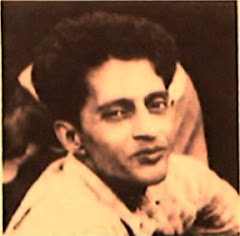
Amit Bhaduri
Over the last two decades or so, thetwo most populous, large countries in the world, Chinaand India, have been growing at rates considerablyhigher than the world average. In recent years thegrowth rate of national product of China has beenabout three times, and that of India approximately twotimes that of the world average. This has led to aclever defence of globalisation by a former chiefeconomist of IMF (Fisher, 2003). Although China andIndia feature as only two among some 150 countries forwhich data are available, he reminded us that togetherthey account for the majority of the poor in theworld. This means that, even if the rich and the poorcountries of the world are not converging in terms ofper capita income, the well above the average worldrate of growth rate of these two large countriesimplies that the current phase of globalisation isreducing global inequality and poverty at a rate asnever before. Statistical half truths canbe more misleading at times than untruths. And thismight be one of them, in so far as the experiences ofordinary Indians contradict such statistical artefact.Since citizens in India can express reasonably freelytheir views at least at the time of elections, theirelectoral verdicts on the regime of high growth shouldbe indicative. They have invariably been negative.Not only did the ?shining India? image crashed badlyin the last general election, even the present primeminister, widely presented as the ?guru? of India?seconomic liberalisation in the media, could neverpersonally win an election in his life. As a result,come election time, and all parties talk not ofeconomic reform, liberalisation and globalisation, butof greater welfare measures to be initiated by thestate. Gone election times, and the reform agenda isback. Something clearly needs to be deciphered fromsuch predictable swings in political pronouncement.
Politicians know thatordinary people are not persuaded by statisticalmirages and numbers, but by their daily experiences.They do not accept high growth on its face value asunambiguously beneficial. If the distribution ofincome turns viciously against them, if theopportunities for reasonable employment and livelihooddo not expand with high growth, the purpose of highergrowth would be widely questioned in a democracy. Thisis indeed what is happening, and it might even appearto some as paradoxical. The festive mood generated byhigh growth is marinated in popular dissent anddespair, turning often into repressed anger. Like amalignant malaise, a sense of political unease isspreading insidiously along with the near double digitgrowth. And, no major political party, irrespective oftheir right or left label, is escaping it because theyall subscribe to an ideology of growth at any cost.
What exactlyis the nature of this paradoxical growth thatincreases output and popular anger at the same time?India has long been accustomed to extensive povertycoexisting with growth, with or without its ?socialistpattern?. It continues to have anywhere betweenone-third and one- fourth of its population living insub-human, absolute poverty. The number of peoplecondemned to absolute poverty declined very slowly inIndia over the last two decades, leaving some 303million people still in utter misery. In contrastChina did better with the number of absolutely poordeclining from 53 per cent to 8 percent, i.e. areduction of some 45 percentage points, quite anachievement compared to India?s 17 percentage points.However, while China grew faster, inequality orrelative poverty also grew faster in China than inIndia. Some claim that the increasing gap between thericher and the poorer sections in the Chinese societyduring the recent period has been one of the worst inrecorded economic history, perhaps with the exceptionof some former socialist countries immediately afterthe collapse of the Soviet Union. The share innational income of the poorest 20 per cent of thepopulation in contemporary China is 5.9 percent,compared to 8.2 per cent in India. This implies thatthe lowest 20 per cent income group in China and inIndia receives about 30 and 40 percent of the percapita average income of their respective countries.However, since China has over two times the averageper capita income of India in terms of both purchasingpower parity, and dollar income, the poorest 20percent in India are better off in relative terms, butworse off in absolute terms. The Gini coefficient,lying between 0 and 1, measures inequality, andincreases in value with the degree of inequality. InChina, it had a value close to 0.50 in 2006, one ofthe highest in the world. Inequality has grown also inIndia, but less sharply. Between1993-94 and 2004-5,the coefficient rose from 0.25 to 0.27 in urban, and0.31 to 0.35 in rural areas. Every dimension ofinequality, among the regions, among the professionsand sectors, and in particular between urban ruralareas has also grown rapidly in both counties, evenfaster in China than in India. In short, China hasdone better than India in reducing absolute poverty,but worse in allowing the gap to grow rapidly betweenthe rich and the poorduring the recent period of highgrowth.
A central factstands out. Despite vast differences in the politicalsystems of the two countries, the common factor hasbeen increasing inequality accompanying higher growth.What is not usually realized is that, the growth inoutput and, in inequality are not two isolatedphenomena. One frequently comes across the platitudethat high growth will soon be trickling down to thepoor, or that, redistributive action by the statethrough fiscal measures could decrease inequalitywhile keeping up the growth rate. These statements arecomfortable but unworkable, because they miss the maincharacteristic of the growth process underway. Thispattern of growth is propelled by a powerfulreinforcing mechanism, which the economist GunnerMyrdal had once described as ?cumulative causation?.The mechanism by which growing inequality drivesgrowth, and growth fuels further inequality has itsorigin in two different factors, both related to someextent to globalisation.
First, incontrast to earlier times when less than 4 per centgrowth on an average was associated with 2 percentgrowth in employment, India is experiencing a growthrate of some 7-8 per cent in recent years, but thegrowth in regular employment has hardly exceeded 1percent. This means most of the growth, some 5-6percent of the GDP, is the result not of employmentexpansion, but of higher output per worker. This highgrowth of output has its source in the growth oflabour productivity. According to official statistics,between 1991 and 2004 employment fell in the organisedpublic sector, and the organised private sector hardlycompensated for it. In the corporate sector, and insome organized industries productivity growth comesfrom mechanization and longer hours of work. EdwardLuce of Financial Times (London) reported that theJamshedpur steel plant of the Tatas employed85000workers in 1991 to produce1million tons of steelworth 0.8million U.S. dollars. In 2005, the productionrose to 5 million tons, worth about 5 million U.Sdollars, while employment fell to 44,000. In shortoutput increased approximately by a factor of five,employment dropped by a factor of half , implying anincrease in labour productivity by a factor of ten.Similarly, Tata Motors in Pune reduced the number ofworkers from 35 to 21 thousand but increased theproduction of vehicles from 129,000 to311,500 between1999 and 2004, implying labour productivity increaseby a factor of 4. Stephen Roach, chief economist ofMorgan Stanley reports similar cases of Bajaj motorcycle factory in Pune. In mid-1990s the factoryemployed 24000 workers to produce 1 million units oftwo wheelers. Aided by Japanese robotics and Indianinformation technology, in 2004, 10500 workers turnedout 2.4 million units, i.e. more than double theoutput with less than half the labour force, anincrease in labour productivity by a factor of nearly6. (Data collected by Aseem Srivastava, ?Why thisgrowth can never trickle down?, aseem62@yahoo.com).One could multiply such examples, but this is broadlythe name of the game everywhere in the privatecorporate sector.The manifold increase in labour productivity, withouta corresponding increase in wages and salaries becomesan enormous source of profit, and also a source ofinternational price competitiveness in a globalizingworld. Nevertheless, this is not the entire story,perhaps not even the most important part of the story.The whole organized sector to which the corporatesector belongs, accounts for less than one-tenth ofthe labour force. Simply by the arithmetic of weightedaverage, a 5-6 per cent annual growth in labourproductivity in the entire economy is possible only ifthe unorganized sector accounting for the remaining 90per cent of the labour force also contributes to thegrowth in labour productivity. Direct information isnot available on this count, but several micro studiesand surveys show the broad pattern. Growth of labourproductivity the unorganized, which includes most ofagriculture, comes from lengthening the hours of workto a significant extent, as this sector has no labourlaws worth the name, or social security to protectworkers. Sub-contracting to the unorganized sectoralong with casualisation of labour on a large scalebecome convenient devices to ensure longer hours ofwork without higher pay. Self-employed workers,totaling 260 million, expanded fastest during the highgrowth regime, providing an invisible source of labourproductivity growth. Ruthless self-exploitation bymany of these workers in a desperate attempt tosurvive by doing long hours of work with very littleextra earning adds both to productivity growth, oftenaugmenting corporate profit, and to human misery.However inequality is increasing for another reason.Its ideology often described as neo-liberalism, iseasily visible at one level; but the underlying deeperreason is seldom discussed. The increasing openness ofthe Indian economy to international finance andcapital flows, rather than to trade in goods andservices, has had the consequence of paralysing manypro-poor public policies. Despite the fact that wecontinue to import more than we export (unlike China),India?s comfortable foreign reserves position,crossing 230 billion U.S dollars in 2008, is mostlythe result of accumulated portfolio investments andshort term capital inflows from various financialinstitutions. To keep the show going in this way, thefiscal and the monetary policies of the governmentneed to comply with the interests of the financialmarkets. That is the reason why successive Indiangovernments have willingly accepted the FinancialResponsibility and Budget Management Act (2003)restricting deficit spending. Similarly, the idea hasgained support that the government should raiseresources through privatisation and so-called publicprivate partnership, but not through raising fiscaldeficit, or not imposing a significant turn over taxon transactions of securities. These measures rattlethe ?sentiment? of the financial markets, sogovernments remain wary of them. The hidden agenda,vigorously pursued by governments of all colour hasbeen to keep the large private players in thefinancial markets in a happy mood. Since the privatebanks and financial institutions usually take theirlead from the IMF and the World Bank, this bestows onthese multilateral agencies considerable power overthe formulation of government policies. However, theburden of such policies is borne largely by the poorof this country. This has had a crippling effect onpolicies for expanding public expenditure for the poorin the social sector.Inequality and distress grows asthe state rolls back of public expenditure in socialservices like basic health, education, and publicdistribution and neglects the poor, while the?discipline? imposed by the financial markets servesthe rich and the corporations,. This process of highgrowth traps roughly one in three citizens of India inextreme poverty with no possibility of escape througheither regular employment growth or relief throughstate expenditure on social services. The high growthscene of India appears to them like a wastelandleading to the Hell described by the great Italianpoet Dante. On the gate of his imagined Hell iswritten, ?This is the land you enter after abandoningall hopes?. .
Extremely slow growth in employment and feeble publicaction exacerbates inequality, as a disproportionatelylarge share of the increasing output and income fromgrowth goes to the richer section of the population,not more than say the top 20 per cent of the incomereceivers in India. At the extreme ends of incomedistribution the picture that emerges in one ofstriking contrasts. According to the Fobres magazinelist for 2007, the number of Indian billionares rosefrom 9 in 2004 to 40 in 2007, much richer countieslike Japan had only 24, France 14 and Italy14. EvenChina, despite its sharply increasing inequality, hadonly 17 billionares. The combined wealth of Indianbillionares increased from US dollars106 to 170 in thesingle year, 2006-7. This 60 per cent increase inwealth would not have been possible, except throughtransfer on land from the state and centralgovernments to the private corporations in the name of?public purpose?, for mining, industrialisation andspecial economic zones(SEZ). Estimates based oncorporate profits suggest that, since 2000-01 to date,each additional per cent growth of GDP has led on anaverage to some 2.5 per cent growth in corporateprofits. India?s high growth has certainly benefitedthe corporations more than anyone else. After several years of high growth along theselines, India of the twenty first century has thedistinction of being only second to the United Statesin terms of the combined total wealth of its corporatebillionares coexisting with the largest number ofhomeless, ill-fed, illiterates in the world. Notsurprisingly, for ordinary Indians at the receivingend, this growth process is devoid of all hope forescape. Nearly half of Indian children under 6 yearssuffer from under-weight and malnutrition, nearly 80per cent from anaemia, while some 40 per cent ofIndian adults suffer from chronic energy deficit.Destitution, chronic hunger and poverty kill andcripple silently thousands picking on systematicallythe more vulnerable. The problem is more acute inrural India, among small children, pregnant females,Dalits and Adivasis, especially in the poorer states,while market oriented policies and reforms continue towiden the gap between the rich and the poor, as wellas among regions. The growth dynamics in operation is being fedcontinuously by growing inequality. With their incomerapidly growing, the richer group of Indians demand aset of goods, which lie outside the reach of the restin the society(think of air conditioned malls, luxury hotels,restaurants and apartments, private cars, world classcities where the poor would be made invisible). Themarket for these good expands rapidly. For instance,we are told that more than 3 in 4 Indians do not havea daily income of 2 U.S dollars. They can hardly be apart of this growing market. However, the logic of themarket now takes over, as the market is dictated bypurchasing power. Its logic is to produce those goodsfor which there is enough demand backed by money, sothat high prices can be charged and handsome profitscan be made. As the income of the privileged growsrapidly, the market for the luxury goods they demandgrows even faster through the operation of the ?incomeelasticities of demand?. These elasticities roughlymeasure the per cent growth in the demand forparticular goods due to one per cent growth in income(at unchanged prices). Typically, goods consumed bythe rich have income elasticities greater than unity,implying that the demand for a whole range of luxurygoods consumed by the rich expands even faster thanthe growth in their income. Thus, the pattern ofproduction is dictated by this process of growththrough raising both the income of the rich fasterthan that of the rest of the society, and also becausethe income elasticities operate to increase evenfaster than income the demand for luxuries. Theproduction structure resulting from this market drivenhigh growth is heavily biased against the poor. Whiledemand expands rapidly for various up-market goods,demand for the basic necessities of life hardlyexpands. Not only there is little growth in thepurchasing power of the poor, but the reduction inwelfare expenditures by the state stunts the growth indemand for necessities. The rapid shift in the outputcomposition in favour of services might be indicativeof this process at the macro level. But specificexamples abound. We have state-of-the-art corporaterun expensive hospitals, nursing homes and spas forthe rich, but not enough money to control malaria andT.B. which require inexpensive treatment. So theycontinue to kill the largest numbers. Lack ofsanitation and clean drinking water transmit deadlydiseases especially to small children which could beprevented at little cost, while bottled water ofvarious brands multiply for those who can afford.Private schools for rich kids often have monthly feesthat are higher than the annual income of an averageunskilled Indian worker, while the poor often have tobe satisfied with schools without teachers, or classrooms. Over time anincreasingly irreversible production structure infavour of the rich begins to consolidates itself.Because the investments embodied in the specificcapital goods created to produce luxuries cannoteasily be converted to producing basic necessities (the luxury hotel or spa cannot be converted easily toa primary health centre in a village etc). And yet, itis the logic of the market to direct investmentstowards the most productive and profitable sectors for?the efficient allocation of resources?. The pricemechanism sends signals to guide this allocation, butthe prices that rule are largely a consequence of thegrowing unequal distribution of income in the society.The market becomes a bad master when the distributionof income is bad. There are insidiousconsequences of such a composition of output biased infavour of the rich that our liberalised market systemproduces. It is highly energy, water and other non-reproducible resources intensive, and often doesunacceptable violence to the environment. We only haveto think of the energy and material content ofair-conditioned malls, luxury hotels and apartments,air travels, or private cars as means of transport.These are no doubt symbols of ?world class? cities ina poor country, by diverting resources from thecountry side where most live. It creates a black holeof urbanization with a giant appetite for primarynon-reproducible resources. Many are forced to migrateto cities as fertile land is diverted to non-agricultural use, water and electricity are taken awayfrom farms in critical agricultural seasons to supplycities, and developmental projects displacesthousands. Hydroelectric power from the big dams istransmitted mostly to corporate industries, and a fewposh urban localities, while the nearby villages areleft in darkness. Peasants even close to the cities donot get electricity or water to irrigate their land asurban India increasingly gobbles up these resources.Take the pattern of water use. According to theComptroller and Auditor General report released to thepublic on 30th Marth 2007, Gujrat increased theallocation of Narmada waters to industry fivefoldduring 2006, eating into the share of drought affectedvillages. Despite many promises made to villagers,water allocation stagnated at 0.86 MAF (million acresfeet), and even this is being cut. Water companies andsoft drink giants like Coca Cola sink deeper to takeout pure ground water as free raw material for theirproducts. Peasants in surrounding areas pay, becausethey cannot match the technology or capital cost. Ironore is mined out in Jharkhand, Chattisgarh and Orissaleaving tribals without home or livelihood. Commonlands which traditionally provided supplementaryincome to the poor in villages are encroached uponsystematically by the local rich and the corporationswith active connivance of the government. The manifestcrisis engulfing Indian agriculture with more than ahundred thousand suicides by farmers over the lastdecade according to official statistics is a pointerto this process of pampering the rich who use theirgrowing economic power to dominate increasingly themultitude of poor. The composition ofoutput demanded by the rich is hardly producible byvillage artisans or the small producers. They find noplace either as producers or as consumers; instead,economic activities catering to the rich have to behanded over to large corporations who can now enter ina big way into the scene. The combination ofaccelerating growth and rising inequality begins towork in unison. The corporations are needed to producegoods for the rich, and in the process they make theirhigh profits and provide well-paid employment for therich in a poor country who provide a part of thegrowing market. It becomes a process of destructivecreation of corporate wealth, with a new coalitioncutting across traditional Right and Left politicaldivision formed in the course of this road to highgrowth. The signboard of this road is ?progressthrough industrialisation?. The middle class opinionmakers and the media persons unite, and occasionallyoffer palliatives of ?fair compensation? to thedispossessed. Yet, they are at a loss as to how tocreate alternative dignified livelihood caused bylarge scale displacement and destruction in the nameof industrialisation. Talks of compensation tends tobe one sided, as they focus usually on ownership and,at best use rights to landed However, the multitude ofthe poor who eke out a living without any ownership oruse right to landed property, like agriculturallabourers, fishermen, or cart-drivers in rural areas,or illegal squatters and small hawkers in cities,seldom figure in this discussion about compensation.And yet, they are usually the poorest of the poor,outnumbering by far, perhaps in the ratio of 3 to 1,those who have some title to landed property. Ignoringthem altogether, the state acquires with single mindeddevotion land, water and resources for the privatecorporations for mining, industrialisation or SpecialEconomic Zones in the name of public interest. Withsome tribal land that can be acquired according to thePESA(1996) act only through the consent of thecommunity(Gram Sabha), consent is frequentlymanufactured at gun point by the law and ordermachinery of the state, if the money power of thecorporations to bribe and intimidate proveinsufficient. The vocal supporters ofindustrialisation never stop to ask, why the very poorwho are least able, should bear the burden of?economic progress? of the rich.
It amounts toa process of internal colonisation of the poor, mostlydalits and adivasis and of other marginalised groups,through forcible dispossession and subjugation. It hasset in motion a social process not altogether unknownbetween the imperialist ?master race? and thecolonised ?natives?. As the privileged thin layer ofthe society distance themselves from the poor, thespeed at which the secession takes place comes to becelebrated as a measure of the rapid growth of thecountry. Thus, India is said to be poised to become aglobal power in the twenty first century, with thelargest number of homeless, undernourished, illiteratechildren coexisting with the billionares created bythis rapid growth. An unbridled market whose rules arefixed by the corporations aided by state power shapesthis process. The ideology of progress throughdispossession of the poor, preached relentlessly bythe united power of the rich, the middle class and thecorporations colonise directly the poor, andindirectly it has begun to colonise our minds. Theresult is a sort of uniform industrialisation of themind, a standardisation of thoughts which sees noother alternative. And yet, there is a fatal flaw. Nomatter how powerful this united campaign by the richcorporations, the media, and the politicians is, eventheir combined power remains defenceless against theactual life experiences of the poor. If this processof growth continues for long, it would produce its owndemons. No society, not even our mal-functioningdemocratic system, can withstand beyond a point theincreasing inequality that nurtures this high growth.The rising dissent of the poor must either besuppressed with increasing state violence floutingevery norm of democracy, and violence will be met withcounter-violence to engulf the whole society. Or, analternative path to development that depends ondeepening our democracy with popular participation hasto be found. Neither the rulers nor the ruled canescape for long this challenge thrown up by the recenthigh growth of India.
References for sources of data and other information.
India Development Report, edited by R. Radhakrishna,Oxford UniversityPress,2008.
Alternative Economic Survey, India 2006-2007, byAlternative Survey Group, NewDelhi, Dannish Books, 2007.
Government of India,Economic Survey, 2006-2007,NewDelhi, Ministry of Finance, 2007. Revisiting employment and growth? by C.Rangarajan,Padma Kaul and Seema,
Money and Finance, September,2007.
Service-led growth? by Mihir Rakshit,
Money andFinance, February, 2007.
Inclusive Growth in India, by S. Mahendra Dev, NewDelhi, Oxford University Press,2008.
Green Left Weekly issue no.710, May, 2007.
Information from Fobres quoted in Globalisation:theIndian experience? by Anil Kumar Jain and Parul Gupta,
Mainstream, Delhi, February 8-14,2008..